


When you think about poaching in South Africa, you may see a chilling image of a mountain of rhino horns, or an elephant brutally killed for its tusks. So what do you think of when I say ‘abalone’? Do you picture the worlds most valuable shellfish? An invertebrate, that is victim to poaching?
This week #factfriday we will learn facts about this highly valued shellfish not only to humans, but to the marine ecosystem.
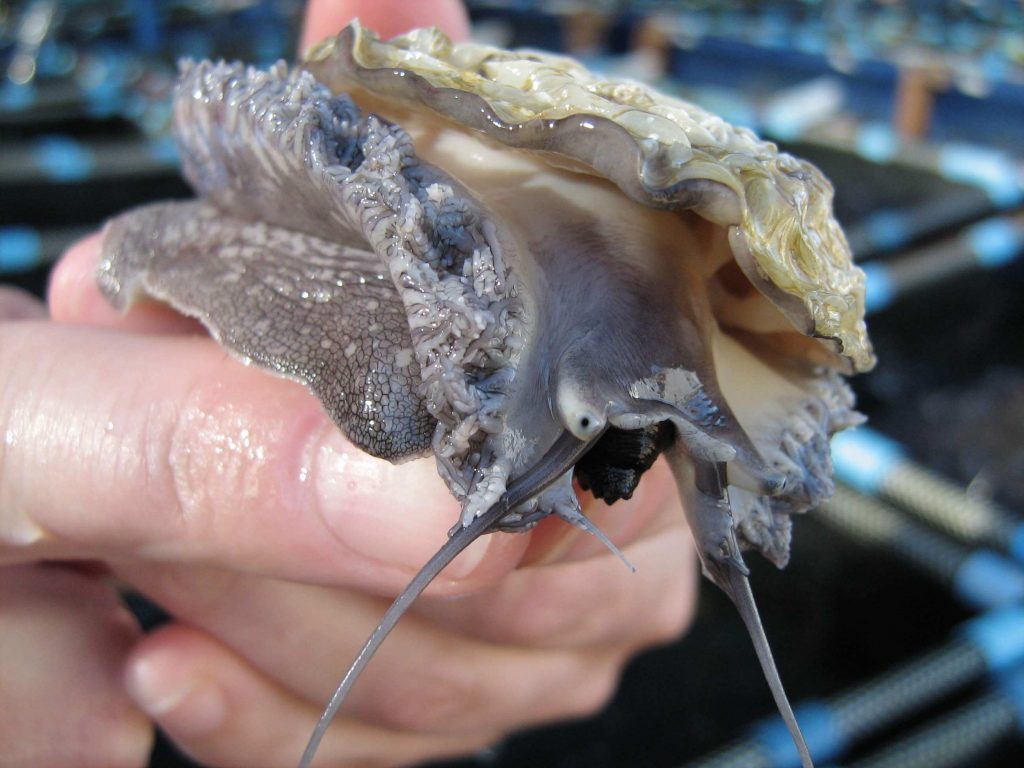
Abalone – “white gold”
Abalone are marine snails that are commonly associated with rocky areas. There are between 100- – 130 species of abalone in the world and five species are endemic to South Africa. Haliotis midae, Haliotis parva, H. spadicea, H. queketti and H. specioso. Haliotis midae is the biggest of them, growing to approximately 230mm in size. It is the only farmed species in South Africa and in Afrikaans it is also know as ‘perlemoen’. It refers to the shimmering mother of pear layer inside of the shell. This is why these molluscs are also dubbed as “white gold”.
Fun fact!
Despite what you might think, they are not your average slow, defenceless snail. With is one powerful ‘foot’ it can outrun its predators and uses its strong foot muscles it can rapidly flip predators off its shell.
A little bit of history
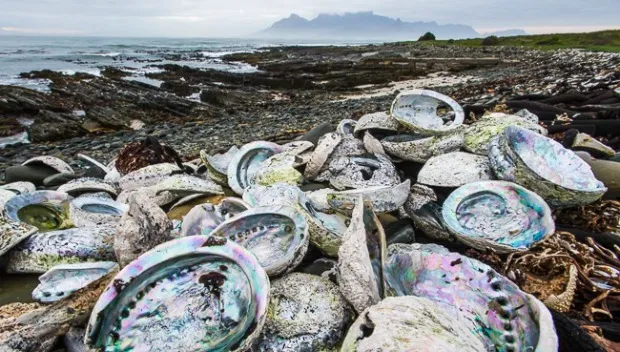
With the decline of fishing after World War II, a pioneering abalone farm was started in Hermanus in the Overstrand, a coastal town about 120 km east of Cape Town. Today abalone is farmed along the South African coast, from Saldanha in the West Coast and along the southern coast up to the east coast.
In the 1940s, commercial diving of wild abalone started with up to 3000 tonnes per year. You can probably guess, that the harvesting of abalone was not regulated and started to have negative consequences to its population size. In the late 1980s commercial quotas were introduced and from 2008 and 2010 no commercial abalone fishery was allowed to do the dramatic decline in their population.
The decrease was due to illegal harvesting and changing ecosystems, with the bulk of illegal abalone being sold in Asia, through channels in Hong Kong where they are relished in restaurants. The demand soared, fuelling a multibillion dollar global export industry and a growing illegal trade from South Africa. Farmed abalone is available all year round from the technologically controlled farms along the South African coast. Fishing of wild abalone from South African waters is highly restricted but current management strategies put in place appear to have little effect at protecting the species from extinction. If illegal harvesting of abalone continues at the current rate, it will soon be extinct from the wild and have devastating impacts on the ecological balance of kelp forests and on local communities.
Valuable “engineers”
Abalone are shellfish that can be found in kelp forests in the ocean waters along most continents and around the Southern coast of South Africa. They play an essential “engineering” role by grazing on seaweeds and floating weeds and help maintain the condition of kelp forests, which support many other species within the ecosystem. To some they may be just a marine snail, but they are far more then that. They help with the cleaning of the ocean. A creature we really good not go without.
Threats
Haliotis midae has most recently been assessed for the IUCN Red List of Threatened Species in 2020 and is listed as Endangered with a decreasing population trend. Poaching and the illegal trade of abalone continues to threaten the species as well as habitat loss and extreme temperatures caused by climate change. The fact that they have a slow growth rate makes them vulnerable to impacts of over-fishing.
If you enjoy the taste of abalone, you must ensure you are eating from a sustainable aquaculture source. Abalone farmers in South Africa are cooperating to ensure that the captive farmer perlemoen gene pool remains healthy and diverse. This ensures that captive abalone populations can be released into the wild as a conservation strategy to prevent extinction of wild populations.
With knowledge comes power, and with power comes great responsibility. Raising awareness and educating other is just one of the first steps to helping the conservation of species.
Come back next Friday for more interesting facts, #factfriday !
Resources & further information:

